
Charging Infrastructure Sized for Daily Driving Patterns
EV charger installation in omaha for homeowners adding Level 2 charging to properties not originally wired for vehicle charging loads
Adding an EV charger to a home built before electric vehicles were a common household consideration involves more than mounting hardware on a garage wall. Most residential garages were wired with a single 20-amp circuit serving a few outlets — adequate for power tools and a chest freezer, but nowhere near the dedicated 240-volt, 40- to 60-amp circuit a Level 2 EVSE requires. Twitchell Electric installs EV chargers for homeowners navigating that gap: evaluating whether the existing panel can carry the added load, running the required circuit to the garage or driveway, and completing the installation so the charger is ready for daily use without creating capacity problems elsewhere in the house.
The installation process starts at the electrical panel, not at the charger itself. The panel has to have available breaker slots and sufficient remaining capacity to add a 40- or 50-amp double-pole breaker — the standard for a Level 2 charger that delivers 32 to 48 amps of continuous charge current. If the panel is already at capacity or rated below 200 amps, a panel upgrade runs concurrently with the charger installation. From the panel, a dedicated circuit is run to the charging location using wire gauge matched to the breaker size and the distance of the run. Longer runs from panel to garage increase the wire gauge required to maintain voltage and keep the circuit within code, a detail that affects both materials cost and conduit routing decisions.
Schedule a panel review to confirm whether your current service can support Level 2 charging before selecting charger hardware..
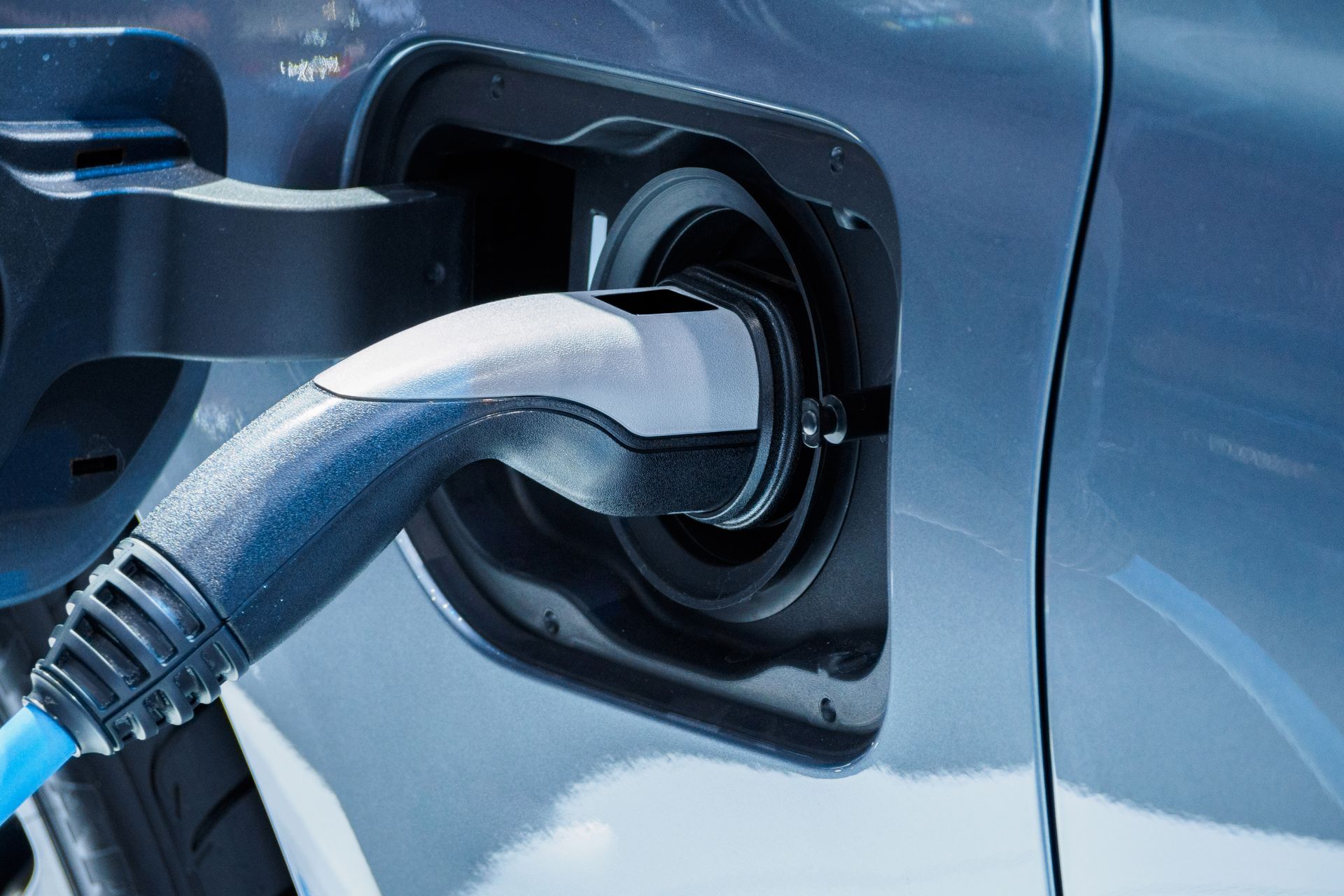
What the EV Charger Installation Actually Accomplishes
A properly installed Level 2 charger delivers 20 to 35 miles of range per hour of charging for most current EV models, compared to roughly 3 to 5 miles per hour from a standard 120-volt outlet. That difference makes overnight charging practical and eliminates the dependency on public charging infrastructure for routine driving. Twitchell Electric sizes the circuit and selects the breaker to match the charger's rated output — a 48-amp charger requires a 60-amp breaker and appropriately gauged wire, and undersizing either the breaker or the conductor creates a thermal load the wiring isn't rated to carry continuously.
Once the installation is complete, the charger connects to your vehicle's onboard charger and begins delivering power at the rated level without tripping other circuits or drawing down panel capacity to the point that other high-draw appliances are affected. In homes where smart charger models are installed, the unit can be set to charge during off-peak hours — a scheduling function that runs through the charger's onboard controls or a companion app, not through any additional electrical configuration.
EV charger installations also involve a permit and inspection in most jurisdictions, because the dedicated circuit constitutes new electrical work subject to code review. The permit documents the installation as inspected, which is relevant for homeowners insurance purposes and for resale — buyers of homes with EV infrastructure increasingly ask whether the charging circuit was permitted and inspected, and a documented installation answers that question directly.
Answers About How the Work Is Done
The most practical questions about EV charger installation focus on what the electrical side of the project involves and how the condition of the existing panel and garage wiring affects the approach — especially in homes where the garage circuit layout reflects construction standards from several decades ago.
What determines whether a panel upgrade is needed before installing an EV charger?
The panel's remaining capacity is calculated by adding the charger's continuous amperage draw to the existing load and comparing the total against the panel's rated amperage minus the standard 20 percent safety margin. A 200-amp panel with a high-draw HVAC system, electric range, and electric water heater may have less available capacity than its rating suggests, and a load calculation is the only accurate way to confirm whether the addition fits.
How is the circuit routed from the panel to the garage charging location?
The route depends on the home's construction: in homes with unfinished basements or accessible crawl spaces, wire is typically run through the structure to a point near the garage. In slab-on-grade construction or homes with finished walls throughout, conduit may be run along exterior surfaces or through attic space, depending on the most direct path that meets code for the wiring method used.
What wire gauge is required for a Level 2 EV charger circuit?
A 40-amp circuit requires 8-gauge copper wire; a 50-amp circuit requires 6-gauge copper wire. Both are significantly heavier than standard household branch circuit wire, and the run distance from panel to charger affects whether an additional gauge increase is needed to compensate for voltage drop over longer distances.
Why does an EV charger installation require a permit in most jurisdictions?
A dedicated 240-volt circuit is classified as new electrical work under most building codes, which means it requires a permit, inspection, and sign-off from the authority having jurisdiction in Omaha. The inspection confirms that the breaker is correctly sized, the wire gauge is appropriate, the connections are secure, and the charger is mounted and bonded per manufacturer and code requirements.
What does the finished installation look like and what should you verify before the job is closed?
The charger should be mounted securely at a height that allows the cable to reach the vehicle's charge port without dragging on the floor, the circuit breaker should be labeled accurately in the panel directory, and the charger's indicator lights should confirm it is receiving power and ready to charge. If the unit has a ground fault protection feature, verify that it responds correctly to a test cycle.
Twitchell Electric handles EV charger installation from panel evaluation through permitted inspection, so the circuit is correctly sized, documented, and ready for daily use. Connect with Twitchell Electric to review your panel capacity and plan the right charging setup for your home.